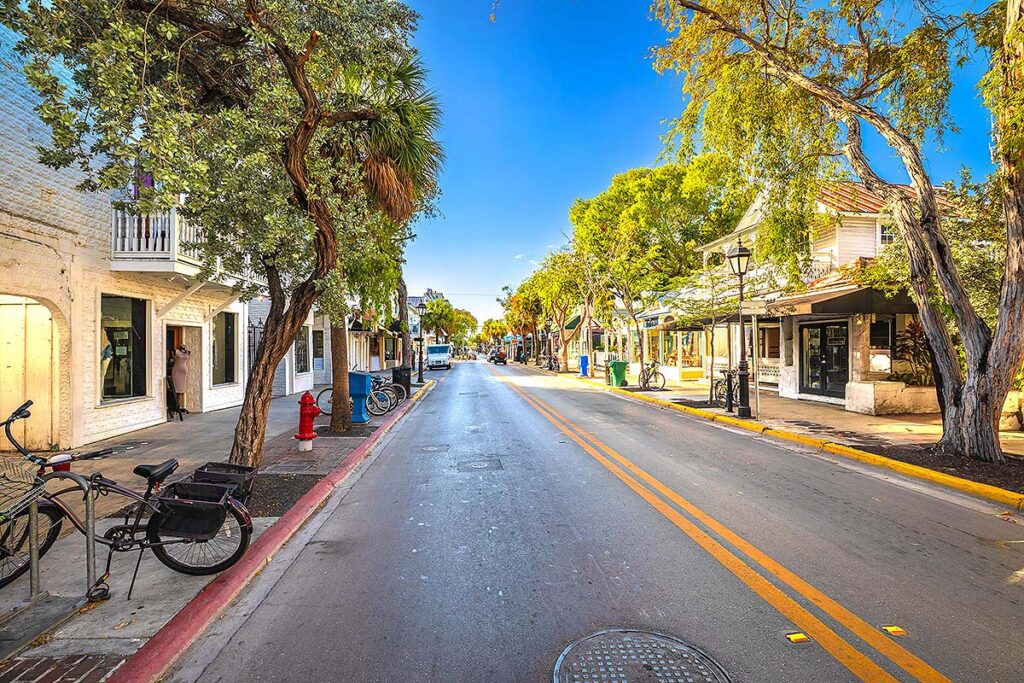
Beyond the beaches and nightlife of Duval Street lies a city built by shipbuilders, wreckers, and literary legends. Exploring the island’s past through its Key West landmarks is a journey into Florida’s maritime soul. Old Town boasts one of the largest preserved wooden historic districts in the country, meaning practically every corner houses incredible historic Key West landmarks.
What makes these sites remarkable is their variety. Within blocks, you can transition from a 19th-century brick lighthouse to a secluded presidential retreat. Whether you are a history buff tracing coastal defenses or a traveler seeking photo backdrops, uncovering these must-see Key West landmarks provides the perfect balance of education and adventure. This guide outlines the top sights, corrects historical myths, and provides an optimized walking route to help you navigate the best Key West landmarks.
Top Historic Key West Landmarks You Need to Visit
To fully appreciate the island’s unique cultural heritage, make sure these essential sites are on your itinerary. Here are the top must-see Key West landmarks waiting to be explored.
1. The Audubon House & Tropical Gardens (Busting the Myth)
Located at 205 Whitehead Street, the Audubon House & Tropical Gardens is a beautiful site among historic Key West landmarks, but it is the subject of a persistent myth. Generic guides often imply ornithologist John James Audubon lived here or painted masterpieces in its rooms during his 1832 visit.

The Accuracy Check: John James Audubon never lived here. Maritime wrecker Captain John Huling Geiger did not build this home until the 1840s—years after Audubon’s brief visit. Saved from demolition in the 1950s, it was named in Audubon’s honor because it houses a massive collection of his lithographs. Today, visitors tour the 1840s Geiger home and wander through spectacular botanical gardens, making it a definitive stop among Key West landmarks.
2. The Custom House Museum
Dominating the skyline near Mallory Square, the Custom House is arguably the most visually striking of all historic Key West landmarks. Completed in 1891 in Richardsonian Romanesque style, this red-brick structure originally housed customs, postal, and court offices. Today, it serves as a premier museum showcasing maritime artifacts, Hemingway exhibits, and folk art.
3. Harry S. Truman Little White House
Tucked away in the quiet Truman Annex neighborhood, the Little White House served as the winter White House for President Harry S. Truman, who spent 175 days here during his presidency. Originally constructed as naval officers’ housing in 1890, it is the only presidential museum in Florida. Touring the preserved 1949 living quarters, poker porch, and executive offices makes it one of the most fascinating must-see Key West landmarks for political history enthusiasts.
4. The Oldest House Museum (The Curry House)
Located at 322 Duval Street, this 1829 wooden structure is the oldest surviving house in South Florida. Once the home of wrecker Captain Francis Watlington, it showcases classic Bahamian Conch architecture with Dade County pine framing, a detached summer kitchen, and exhibits on the wrecking industry. It is an essential addition to your list of historic Key West landmarks.
5. The Key West Lighthouse & Keeper’s Quarters
Standing 73 feet tall on Whitehead Street, the Key West Lighthouse is a testament to maritime resilience. Built inland in 1848 after a hurricane destroyed the coastal tower, it guided ships through the reef until 1969. Visitors can climb the 88 spiral iron steps (there is no elevator) to the observation gallery for panoramic views, then explore the 1887 Keeper’s Quarters.
6. The Southernmost Point Buoy
No list of must-see Key West landmarks is complete without the Southernmost Point Buoy. Located at Whitehead and South Streets, this painted concrete marker designates the lowest latitude of the contiguous United States, 90 miles from Cuba. To avoid hour-long lines under the midday sun, visit this photo spot before 8:30 AM.
The 3-Block Landmark Walking Route
A major advantage of touring historic Key West landmarks is how closely they cluster together. To see the best sights without exhausting yourself in tropical heat, follow this efficient “3-Block Landmark Walking Route.” In a single morning, you can tour five must-see Key West landmarks with minimal walking.

- Start at Mallory Square: Begin at the waterfront. Visit the red-brick Custom House and the nearby Shipwreck Treasure Museum to learn about the 19th-century salvage industry.
- Walk 1 Block Down Whitehead Street: Head south to stop at the Audubon House & Tropical Gardens. Enjoy shaded brick courtyards and antique galleries.
- Turn Right into the Truman Annex: Pass through the neighborhood gates to tour the Harry S. Truman Little White House, Florida’s only presidential museum.
- Walk 2 Blocks Over to Duval Street: Head east to finish your morning route at the Oldest House Museum. After touring the historic Conch architecture, you are perfectly positioned on Duval Street for lunch.
Island History: The Forces That Built Key West
Understanding the context behind these historic Key West landmarks deepens your appreciation for the island. In the 19th century, the waters surrounding the Florida Keys were a perilous gauntlet for merchant ships. The thriving “wrecking” industry—where licensed local captains salvaged cargo from vessels wrecked on the coral reefs—made Key West the wealthiest city per capita in America by the 1850s.
Key West Landmark Timeline
- 1829: The Oldest House is constructed on Duval Street, showcasing early Conch architecture.
- 1840s: Captain Geiger builds the grand estate that will eventually become the “Audubon House.”
- 1848: The Key West Lighthouse is built inland on Whitehead Street following a devastating coastal hurricane.
- 1891: The towering red-brick Custom House opens by the harbor to manage the island’s booming maritime trade.
- 1946: President Truman begins his restorative winter visits to the Little White House.

This massive influx of maritime wealth funded the construction of elaborate Victorian mansions, robust brick government buildings, and intricate wooden Conch houses. Later, military investments leading up to the Civil War and the Spanish-American War resulted in the construction of massive brick fortifications along the island’s coastline, further diversifying the array of Key West landmarks visitors can explore today.
Forts and Free Historic Sites
If you want to dive deeper into the island’s heritage without breaking your budget, there are excellent complementary sites to add to your itinerary.
Exploring the Island’s Coastal Defenses
If the Custom House and Lighthouse leave you wanting more monumental brick architecture, you must explore the island’s coastal fortifications. Fort Zachary Taylor Historic State Park houses the largest collection of Civil War-era cannons in the country, while the massive ruins of Fort East Martello feature incredible art galleries. Touring these historic forts provides a deep dive into the island’s strategic military importance.
Free Landmark Discoveries
For budget-conscious travelers, the island offers several exceptional must-see Key West landmarks that cost absolutely nothing to enter. The Key West Cemetery in the center of Old Town offers free self-guided tours of ornate above-ground crypts and humorous epitaphs. Additionally, the West Martello Tower at Higgs Beach features beautiful brick ruins completely overtaken by the Key West Garden Club’s lush botanical gardens. These sites rank among the best free things to do in Key West.
Preserving the Island’s Unique Heritage
Exploring Key West landmarks connects you directly to the resilient shipbuilders, wealthy salvagers, and eccentric artists who shaped the Florida Keys. From the truth behind the Audubon House to the towering brick presence of the Custom House, each of these historic Key West landmarks tells a vital piece of the island’s story. By utilizing the 3-Block Walking Route and planning your visits early in the day, you can effortlessly experience the very best must-see Key West landmarks during your tropical getaway.
FAQs
Are local historical sites and museums open on major holidays?
Most major museums and historical sites operate on restricted schedules or close entirely on Thanksgiving Day, Christmas Day, and New Year’s Day. However, outdoor monuments like the Southernmost Point Buoy and the exterior of the Historic Seaport remain accessible year-round, 24/7.
Is there a multi-attraction pass available for island museums?
Yes. The Key West Art & Historical Society offers a “KWAHS All Access Pass” that grants discounted entry to the Custom House Museum, the Key West Lighthouse & Keeper’s Quarters, the Fort East Martello Museum, and the Tennessee Williams Museum. This is a highly cost-effective option if you plan to visit multiple historical properties.
How wheelchair accessible are 19th-century historic homes?
Accessibility varies greatly by property due to strict historical preservation laws. For instance, the Harry S. Truman Little White House offers extensive first-floor accessibility and provides a photo album of the second floor for those unable to use the stairs. However, sites like the Lighthouse tower and the second floors of older Conch cottages are not wheelchair accessible.
Which historical sites are best for keeping young children entertained?
The Key West Shipwreck Treasure Museum is a massive hit with kids, as it features interactive actors, a 65-foot lookout tower to climb, and real silver bars they can touch. The Key West Butterfly & Nature Conservatory is another fantastic, family-friendly site that keeps children engaged while touring the historic district.
RELATED POSTS

Finding The Best Cuban Sandwich in Key West
cuban • Cuban Restaurants