
Exploring Old Town Key West for the first time offers an unforgettable introduction to Florida’s most tropical and historic island destination. A guided tour or structured visitor guide is the best way to explore the island’s landmarks, literary history, and vibrant waterfront culture.
Why Choose Old Town Key West?
- Compact Walkability: Easily navigate historic neighborhoods, tropical beaches, and vibrant entertainment hubs without needing a car.
- Rich Cultural Heritage: Discover centuries of history, from wrecking and sponging origins to famous literary figures and presidential retreats.
- Iconic Sunset Celebration: Gather at the waterfront every evening for live street performers, local artisans, and stunning Gulf Coast views.
- Distinctive Local Flavors: Indulge in authentic island cuisine, including fresh conch fritters, Cuban sandwiches, and world-famous Key lime pie.
Old Town Key West Points of Interest & Things to Do
- Mallory Square: Watch street performers and local vendors gather for the legendary nightly Sunset Celebration along the historic waterfront.
- The Ernest Hemingway Home & Museum: Walk through the 1851 estate, writing studio, and tropical gardens home to famous six-toed polydactyl cats.
- Southernmost Point Buoy: Take a photo at the iconic red, yellow, and black oceanfront marker situated just 90 miles from Cuba.
- Duval Street: Stroll the lively mile-long main drag packed with historic saloons like Sloppy Joe’s, sidewalk cafes, art galleries, and live music.
- Key West Lighthouse & Keeper’s Quarters: Climb 88 steps to the top of the 1848 tower for panoramic views across the island’s rooftops.
- Harry S. Truman Little White House: Tour Florida’s only presidential museum, preserved with original furnishings from President Truman’s winter retreats.
How To Navigate Old Town Key West for First-Timers
Old Town is structured on a grid layout spanning roughly 2 square miles. The primary commercial thoroughfare, Duval Street, extends from the Gulf of Mexico on the north end to the Atlantic Ocean on the south end. Secondary streets like Whitehead Street and Simonton Street run parallel, making general orientation straightforward.

Exploring Old Town on Foot
Walking remains the most effective method for exploring the neighborhood. Side streets are lined with historic wooden homes, tropical garden canopies, and brick sidewalks that are best experienced on foot. Crossing the district from the Gulf to the Atlantic along Duval Street takes approximately 25 to 30 minutes at an average pace.

Renting Bicycles and Scooters
Bicycles represent a primary mode of local transportation. Key West features dedicated bike paths, wide lanes, and bike racks outside nearly every restaurant, beach, and museum. Renting a bicycle for the duration of your stay provides rapid transit through narrow residential lanes that vehicles cannot easily navigate.
The Duval Loop Bus
The Duval Loop is a free public bus service operated by the City of Key West. The route runs continuously through Old Town, making stops near major parking garages, harbor docks, shopping zones, and historic sites. The buses are air-conditioned, low-floor accessible, and run every 15 minutes during morning and afternoon hours.
Golf Carts and Electric Cars
Low-speed vehicles and street-legal golf carts are available for rent throughout the island. While popular for small groups, parking spaces designated for four-wheeled vehicles remain limited during peak travel seasons.
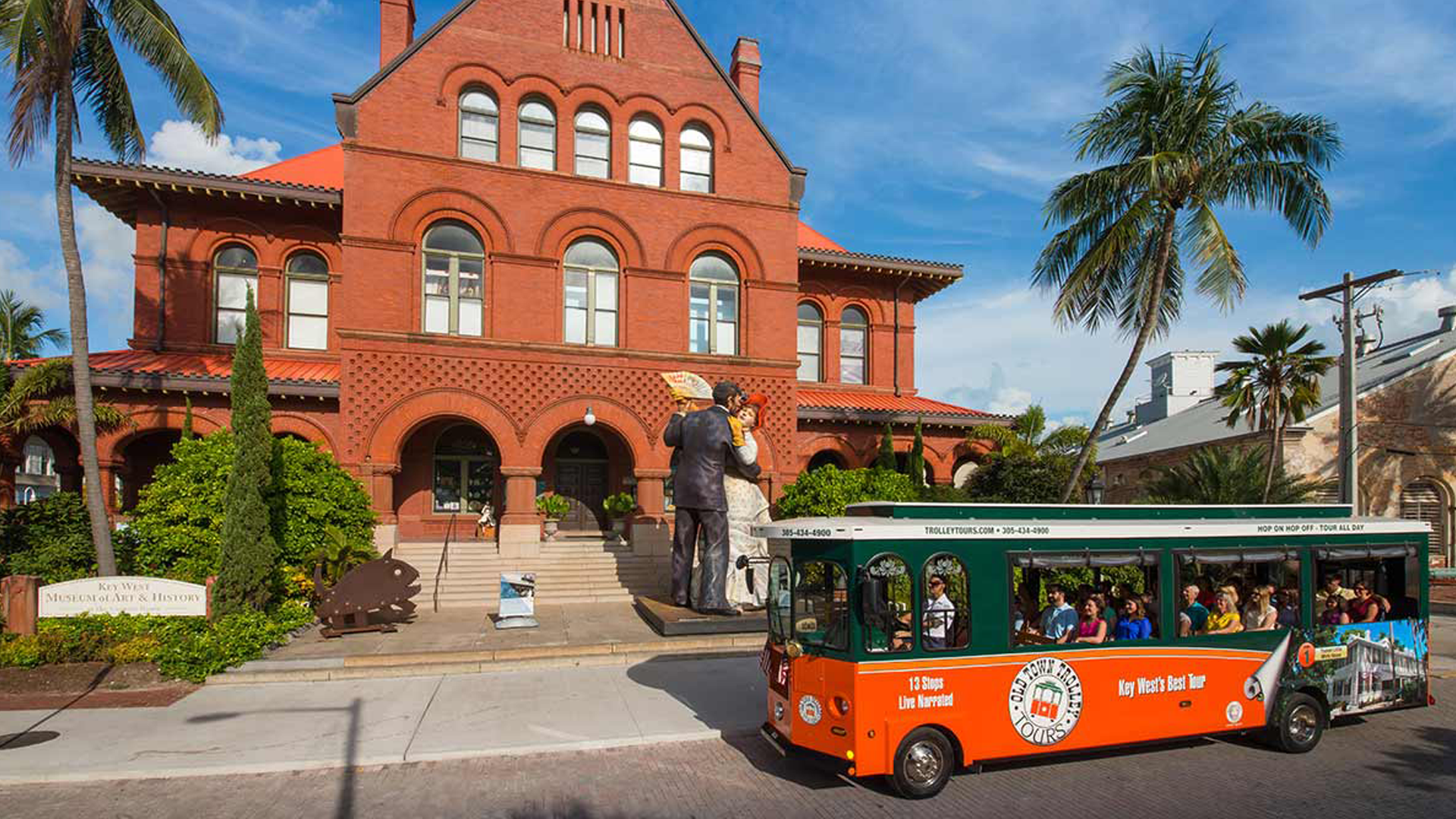
The Conch Tour Train and Old Town Trolley Tours
For an overview of the area during your first day, hop-on, hop-off trolley tours provide guided commentary on island geography, local history, and architectural points of interest. Additionally, the loop on the Conch Tour Train is a unique, island-specific way to get the lay of the land. Using these services early in a trip helps visitors get oriented before exploring on foot.
Things To Do in Old Town Key West on Your First Trip
Our first-time visitor’s guide to Old Town Key West ensures you don’t miss any of the famous geographic markers and daily cultural traditions the Conch Republic has to offer.
The World-Famous Sunset Celebration at Mallory Square
Every evening, residents and visitors gather at Mallory Square on the northwestern waterfront to mark the end of the day. The waterfront plaza fills with street performers, acoustic musicians, local artists, and food vendors selling regional specialties like conch fritters and Key lime pie. Positioned directly over Key West Harbor, Mallory Square provides open horizon views as the sun drops into the Gulf of Mexico. Plan to arrive 45 to 60 minutes prior to sunset to secure a position along the plaza seawall.

Strolling Duval Street
Duval Street functions as the central artery for dining, nightlife, art galleries, and retail shopping. The street stretches 1.2 miles across the island, featuring open-air bars, historic saloons, clothing boutiques, and outdoor cafes.
The northern end near the harbor offers vibrant nightlife and historic drinking establishments, while the upper southern end features quieter art galleries, historic inns, and coffee shops. Walking the entire length allows first-time travelers to observe how the district’s character shifts from block to block.

Snap a Photo at the Southernmost Point Buoy and Mile Marker 0
Key West holds distinct geographic designations that draw visitors for photographic keepsakes.
- Southernmost Point Buoy: Located at the corner of Whitehead Street and South Street, this painted concrete buoy marks the southernmost land point in the continental United States. It sits roughly 90 miles north of Cuba. Lines form early in the morning, so visiting before 8:30 a.m. reduces wait times.
- Mile Marker 0: Situated at the intersection of Whitehead Street and Fleming Street, the sign marks the end of U.S. Route 1, which stretches over 2,300 miles north to Maine. A green photo marker stands on the corner, with souvenir shops across the street offering commemorative items.

Get Out on the Water
Key West sits adjacent to the Florida Straits and the third-largest living coral barrier reef system in the world, and exploring the marine environment surrounding Old Town could be a unique addition to your first visit. Visitors can board a catamaran for a three- to four-hour reef snorkeling trip to swim alongside sea turtles, rays, and tropical fish, or embark on a three-hour ecotour to observe wild bottlenose dolphin pods in their natural habitat. For a more relaxed excursion, two-hour evening sunset cruises feature live music and drinks on Key West Harbor, while deep-sea fishing charters offer half- or full-day trips offshore targeting trophy catches like mahi-mahi, sailfish, tuna, and wahoo.

Relax at Fort Zachary Taylor Historic State Park
Positioned on the southwestern tip of Old Town, Fort Zachary Taylor Historic State Park covers 87 acres of beachfront and pinewoods. The park contains a preserved mid-19th century fort alongside the island’s best natural beach. The shore consists of ground coral rock, yielding clear water conditions for swimming, snorkeling, and fishing off the stone jetties. Shade trees, picnic tables, and rental concession stands make this park an effective refuge from urban foot traffic.

History and Facts About the Historic District
Understanding Key West’s historical background provides the necessary context when exploring its modern streets. The island’s geography made it a pivotal site for maritime commerce, military defense, and international trade throughout the 18th and 19th centuries. Any thorough first-time visitor’s guide to Old Town Key West must account for these deep structural roots.
The Wrecking and Maritime Wealth Heritage
During the mid-19th century, Key West became the wealthiest city per capita in the United States. This prosperity was built primarily on the industry of “wrecking” or salvaging cargo from ships that foundered on the hazardous coral reefs bordering the Florida Straits.
Observation towers were erected along the shoreline to spot stranded vessels. Wrecking captains licensed by federal courts salvaged cargo ranging from cotton and mahogany to gold and fine China, earning court-awarded percentages of the recovered goods. The wealth generated by wrecking financed the construction of the elaborate homes that remain standing across Old Town today.
Conch Architecture
The distinct architectural style found throughout Old Town is known as Conch architecture. Developed by ship carpenters in the 1800s, this building style adapted traditional European design to withstand high heat, extreme humidity, and tropical storms.
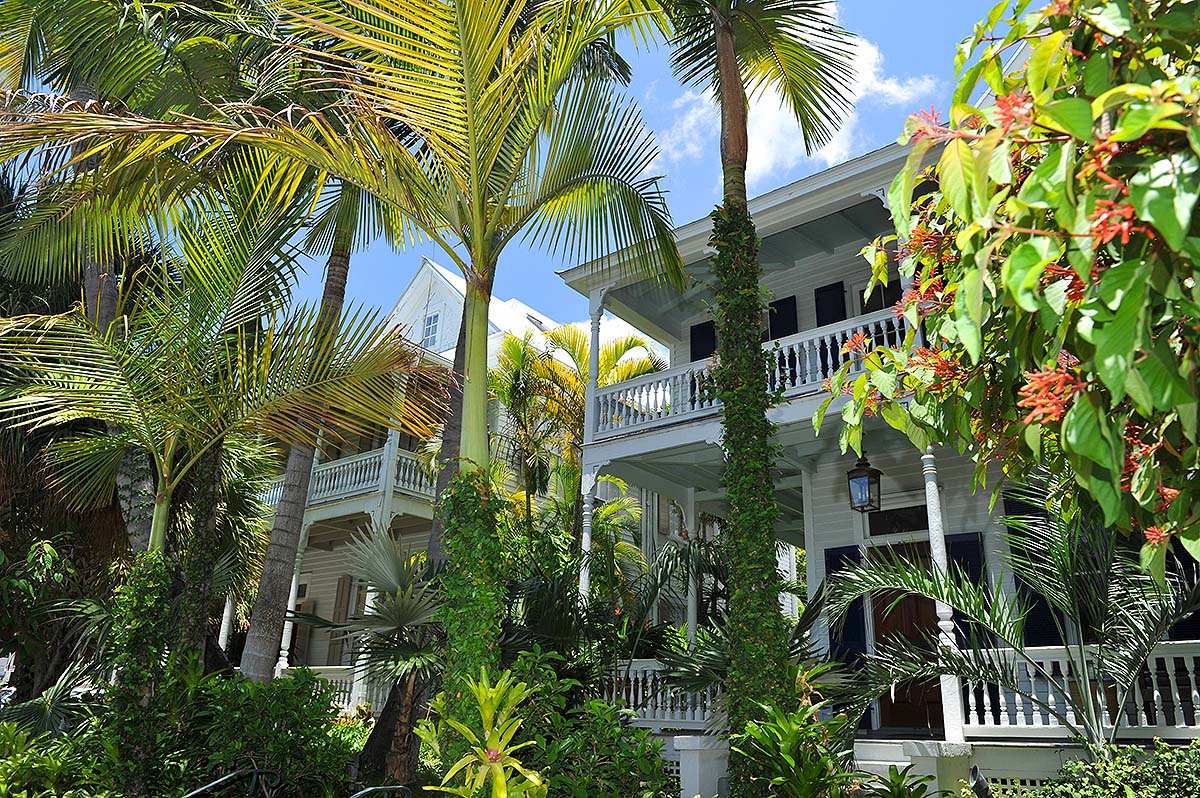
Common structural features include:
- Pitched Metal Roofs: Designed to shed water quickly and reflect solar heat away from living quarters.
- Wraparound Porches (Piazzas): Deep overhangs shade interior walls and capture sea breezes.
- High Ceilings and Large Sash Windows: Positioned directly across from one another to facilitate ventilation before air-conditioning existed.
- Louvered Shutters: Protect glass windows from hurricane winds while permitting airflow.
- Pier Foundations: Homes were elevated on coral rock piers to allow floodwaters to pass underneath without damaging the main structure.
Bahamian and Cuban Cultural Influences
Key West’s geographic proximity to the Caribbean heavily shaped its demographic development. In the late 1800s, thousands of Cuban immigrants migrated to Key West to escape political instability and establish a thriving cigar manufacturing industry. At its peak, Key West produced millions of hand-rolled cigars annually across dozens of factories in Old Town.
Concurrently, Bahamian immigrants, known locally as Conchs, settled on the island, bringing maritime skills, boatbuilding expertise, and distinct culinary traditions. The Bahamian influence introduced ingredients like conch meat, plantains, and tropical spices, while Cuban culture established traditional coffeehouses, Latin rhythms, and historic union halls that remain active community hubs today.
Key West’s Historic Landmarks
Old Town functions almost like an open-air museum, containing dozens of preserved sites listed on the National Register of Historic Places. Adding these architectural landmarks to your itinerary is an essential recommendation from this first-time visitor’s guide to Old Town Key West.
The Ernest Hemingway Home & Museum
Located at 907 Whitehead Street, this Spanish Colonial estate was the home of author Ernest Hemingway during the 1930s. Built in 1851 out of native coral rock quarried directly from the site, the home contains original furnishings, personal books, and architectural details selected by Hemingway and his wife, Pauline.
- Key Highlights: The property features the first in-ground swimming pool constructed in Key West, Hemingway’s second-story writing studio preserved as he left it, and lush tropical gardens.
- Polydactyl Cats: The grounds are home to approximately 60 polydactyl (six-toed) cats. These felines are descendants of a white six-toed cat named Snow White, given to Hemingway by a ship captain.
- Visitor Info: Guided tours run continuously throughout the day, covering Hemingway’s literary output, personal life, and time spent on the island.

Harry S. Truman Little White House
Situated in the Truman Annex neighborhood of Old Town, Florida’s only presidential site served as the winter White House for President Harry S. Truman from 1946 to 1952. Originally constructed in 1890 as quarters for naval officers, the building was adapted for presidential use following World War II.
Truman spent 175 days of his presidency working from this location, hosting cabinet meetings, domestic policy discussions, and international summits. Today, the museum contains original 1940s furnishings, presidential logs, and official decor. Guided tours explain Cold War political history, presidential security operations, and Truman’s daily routine in Key West.

The Key West Lighthouse
Located directly across from the Hemingway Home on Whitehead Street, the Key West Lighthouse opened in 1848 to guide naval vessels and commercial ships through shallow reef passages.
Visitors can climb the 88 iron steps to the top of the tower for panoramic views across Old Town, the harbor, and the surrounding ocean waters. The adjacent Keeper’s Quarters Museum displays historical artifacts, antique Fresnel lenses, photos, and personal logs detailing the lives of the men and women who maintained the light until its decommissioning in 1969.

Fort Zachary Taylor Historic State Park
In addition to its recreational beach areas, the park contains a National Historic Landmark fort built between 1845 and 1866. The fort remained under Union control throughout the Civil War, serving as a base for the Gulf-blockading squadron that intercepted Confederate blockade runners.
Today, the fort houses the largest concentration of Civil War armament in the United States. Visitors can walk along the upper brick tiers, inspect heavy coastal artillery cannons, explore interior armories, and view historic construction elements designed to withstand naval bombardments.
How Will You Spend Your First Time in Old Town Key West?
Old Town Key West remains a top travel destination because it combines historic architecture, maritime traditions, and direct ocean access within a walkable environment. By using this first-time visitor’s guide to Old Town Key West, travelers can navigate the district efficiently, enjoy key cultural attractions, and learn about the unique historical factors that shaped this southernmost community.
FAQs
What is the best time of year to visit Old Town Key West?
The best time to visit is from December through April. During these months, temperatures range from 70 to 80 degrees Fahrenheit with low humidity and minimal rainfall. This period offers ideal weather for walking, water sports, and attending outdoor evening events, though it coincides with peak tourist season.
How many days do you need for a first trip to Key West?
A three to four-day stay provides adequate time for a first trip. This time frame allows visitors to explore major historic sites like the Hemingway Home and Truman Little White House, spend an afternoon at Fort Zachary Taylor, participate in a water tour, and experience the Sunset Celebration at Mallory Square without feeling rushed.
Do I need to rent a car if I stay in Old Town?
No, renting a car is generally unnecessary if your accommodations are located within Old Town. The historic district is exceptionally walkable, and alternative transportation options like the Old Town Trolley are readily available. Please note: Parking in Old Town is limited and often carries high daily fees.
Is Old Town Key West family-friendly?
Yes, Old Town offers numerous attractions suitable for families. Daytime activities like the Key West Butterfly & Nature Conservatory, the Key West Aquarium, Fort Zachary Taylor State Park, glass-bottom boat tours, and climbing the Key West Lighthouse appeal to visitors of all ages. While Duval Street features vibrant bar scenes during late-night hours, daytime and early evening atmospheres throughout Old Town are family-oriented.